Your AI prototype is the best first draft of a spec you'll get. Here's how to take it to production.
More of the projects that reach us start with a link instead of a deck. A founder built the first version in Lovable over a few weekends. A product manager has a Bolt app the sales team already demos. Someone made the front end in v0 and wired it to a database to see if the idea held. We log in, click around, and it works, more or less.
Then comes the question. Can you build on this, or do we start over?
If you're taking a vibe-coded prototype to production, I think that's the wrong question to start with. The most valuable part of the prototype is what it tells us about what you want. The flows, the screens, the words your users read, the rules you can already see working. Read carefully, it's a better starting point for specs than any requirements document I've seen. It also made decisions nobody approved, about who can see what, where the data lives and what a number on the screen is connected to. Those have to come out into the open, and a person has to approve them, before anything gets built.
Once the specs are good, keeping the code or not becomes a smaller decision than it looks. An agentic system builds the equivalent from approved specs much faster than a team could a couple of years ago.
By a vibe-coded prototype I mean a working app built mostly by prompting an AI tool like Lovable, Bolt, v0 or Replit, usually by one person and without written specs. My colleague Santiago Vidal wrote about the difference between vibe coding and agentic coding. This piece starts where his ends, with the prototype already on the table.
Is a vibe-coded prototype production ready?
Sometimes, and the screens won't tell you which. It's also not the most useful question. What matters more is how much the prototype helps you reach good decisions about the product, because that's where most of the time on a project goes now.
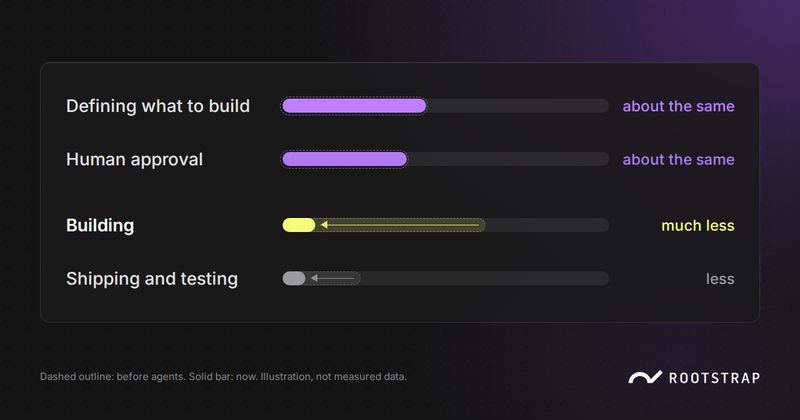
When I looked at where the time goes when AI agents write the code, building was about 10% of the measured hours on one project. Defining what to build took 44%, and people reviewing and approving it took 38%. A prototype that got ahead on the coding saves part of that 10%. A prototype that shows clearly what you want helps with the other 82%.
Production also asks for things nobody asked the prototype to do. Roles that shouldn't see each other's data. A schema that changes without losing what's stored. A customer whose company requires SSO.
The tools aren't what's missing. Lovable, Bolt and Replit can all deploy an app and connect it to a database, so when someone asks me whether Lovable is production ready, I say the tool can host a production app. The harder question is whether anyone decided how the app should behave when a user does something unexpected.
Being live doesn't settle it either. One of the client apps we took on was already in production on Lovable, with real users. The database had been managed through the tool, with tables and permissions created along the way and no migrations behind them. The app worked. The repo couldn't recreate it.
Can you use a prototype as a spec?
Not as it is, but it's one of the best places to start one. The spec gets drafted from it with low confidence, and every gap between the prototype and what you actually want becomes an open question.
A requirements document tells us what someone thinks they want. A prototype shows what you chose when you had to put something on a screen. If you built three tabs and not four, that was a choice. If a button says "Send to my manager", those are probably the words your users use. You rarely get that from a document.
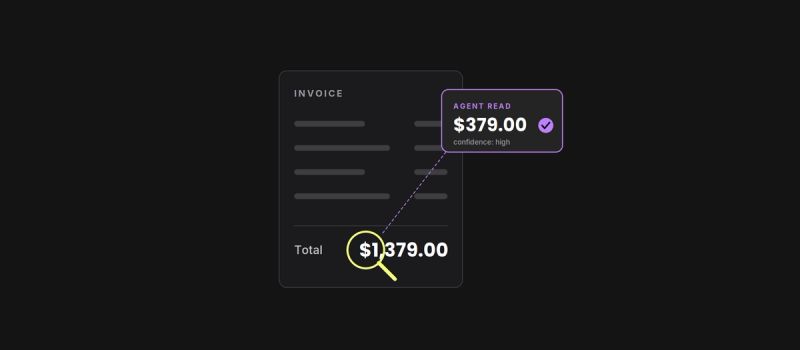
The catch is that a prototype mixes choices with accidents. A field exists because the model added it. A default was never picked by anyone. A screen shows a total, and nobody has said where the total comes from. You can't always tell which is which by looking either, so we ask.
Asking is the rule in Rootshift, our agentic delivery system. The prototype is evidence of the capabilities and flows you intend. It isn't a finished spec, but it's the best first draft I know, and one of the best paths to quality specs we build together with you. That's why we're really glad when someone arrives with one. It means you've already sat with your product and made a lot of small choices. We start from something you built instead of a blank page, and our questions get sharper because we can point at a screen.
Rootshift drafts the Ground Truth, the shared spec every agent builds from, using the prototype together with call transcripts, documents and any existing code. It drafts with low confidence, and then we go through it with you. When the prototype and what you tell us disagree, the agentic system doesn't pick a side. Say you tell us every request needs a manager's approval, and in the prototype anyone can approve. That becomes an open question with a named owner, and usually a short conversation that settles something you didn't know was still open. The specs that come out of that are better than what a document gives us, because you've seen the product working and know what you meant.
The code gets the same treatment. We read it for content and business rules, and we never copy it in blindly.
What should you take from a prototype, and what should you leave?
Take what the user sees and does. Review the backend and data model against the specs, and treat security, permissions and integrations as open decisions for a person to approve.
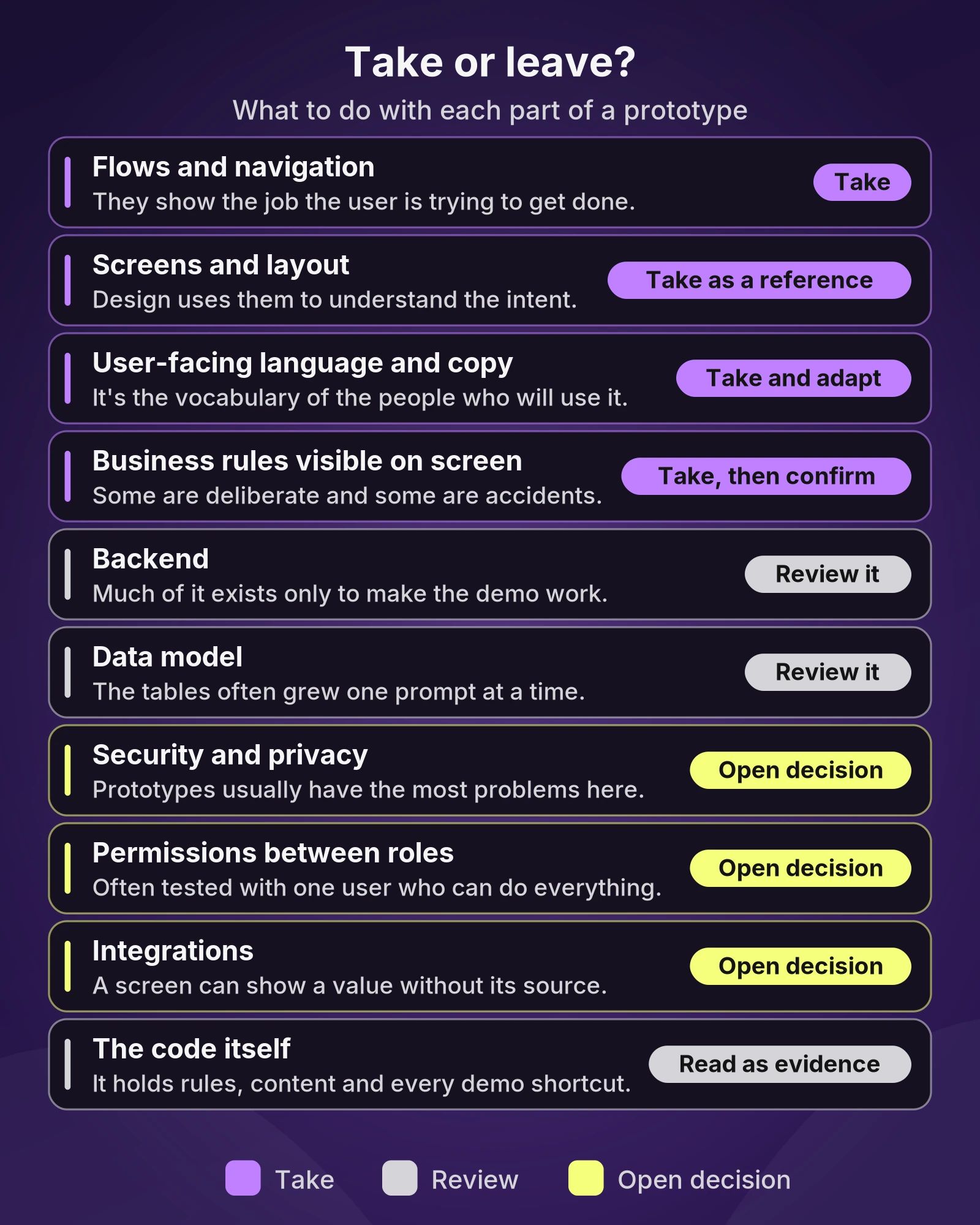
Take what the user sees and does, review the backend and data, and leave security, permissions and integrations as open decisions for a person.
- Flows and navigation. Take. They become capabilities and user stories. They show the job the user is trying to get done.
- Screens and layout. Take as a reference. Design uses them to understand the intent, then builds a design system that fits the product.
- User-facing language and copy. Take and adapt. It's the vocabulary of the people who will use the product, and it still needs editing for tone and consistency.
- Business rules visible on screen. Take, then confirm with the product owner. Some are deliberate and some are accidents.
- Backend. It depends. Review it against the specs. Some are a usable starting point. Many exist only to make the demo work.
- Data model. It depends. Review it against the specs. Sometimes it holds up. Often the tables grew one prompt at a time, with no plan for change.
- Security and privacy. Leave. Open decision. This is where prototypes usually have the most problems. Often there's no MFA or SSO and no retention policy.
- Permissions between roles. Leave. Open decision. The other usual weak spot. Prototypes are often tested with one user who can do everything.
- Integrations. Leave. Open decision. A screen can show a value without saying where it comes from.
- The code itself. Read as evidence. Never copy blindly. It holds rules and content, and every shortcut taken to get the demo working.
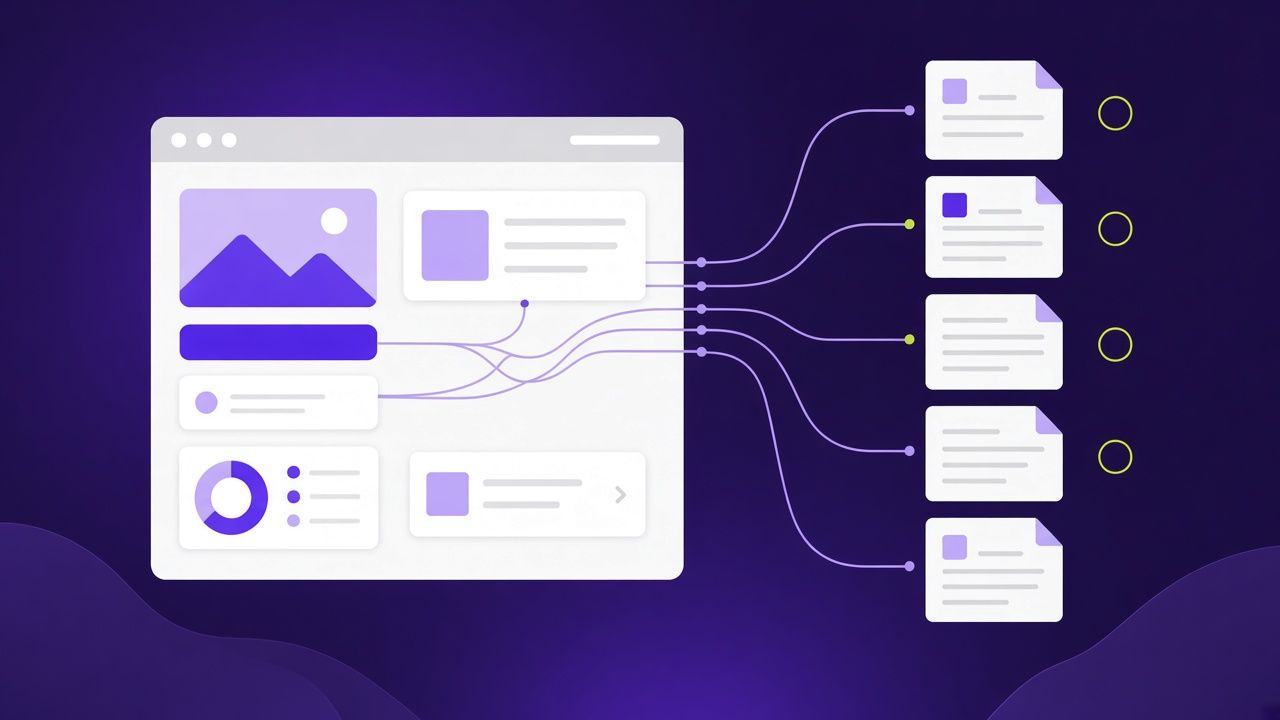
Integrations are the row people underestimate. A dashboard shows a customer's balance. Is it coming from their bank, from an ERP, or from a spreadsheet someone uploads every Monday? The screen looks the same in all three cases. The work behind it doesn't.
We saw this on a presales project where the client had a clickable prototype with no backend at all. In a single demo call, three new capabilities came up, and all three were integrations, things like voice transcription and messages arriving from other channels. None of them showed on any screen. They came out because someone asked what happens after the user taps the button.
What decisions did the prototype make for you?
More than you'd expect, and most of them are about business rules, permissions and data. Each one should be found, written down and approved by a person before the agentic system builds on top of it.
By a decision I mean a choice about how the product should behave, like who can approve a request or what happens to an order when a payment fails. In the Ground Truth, each one is recorded with an owner and a source.
We looked at three Rootstrap projects that started from a client prototype, and at the 93 decisions across them that cite it. Only 12 of them, about one in eight, were settled implicitly by the prototype and kept as they were. A person made most of the rest explicitly. And about 60% of the 93 were about business rules, permissions or data.
On the presales project, 28 of its 64 decisions, 44%, traced back to the prototype. On the two projects that went on to be built, the share is much smaller. About 5% of the decisions on one, and about 3% on the other. That's not because the prototype mattered less at the start. Once building begins the decisions keep coming, and almost none of the new ones have anything to do with the prototype.
It's a small sample, classified by hand in a single pass, so I read it as a direction.
A typical example is visibility. In the prototype, every logged-in user sees every record, because there was only ever one test user. Nobody chose that. It's still a decision, and if it reaches production unexamined, it's a privacy decision. It has happened in public. In 2025 a vulnerability report (CVE-2025-48757) described Lovable-generated apps whose database rules let outsiders read or write their tables, a finding Lovable disputed.
Rootshift, our agentic system, is good at finding these. It reads the prototype and the code, notices when a rule is implied but never stated, and lays out the options. It shouldn't be the one choosing. Whether a manager can read their team's private notes, or what happens to someone's data when they leave the company, are calls with a business cost, and a person has to own them. That's the deciding job I described in human in the loop: decide, own, or check, and on these projects it's where people's time pays off most.
Should you refactor or rebuild a vibe-coded app?
Both can be right. With approved specs in hand, the gap between them is smaller than it looks, and the choice depends on who uses the app today, whether the code does what the specs say, and whether you can own it.
We've done both. The Lovable app I mentioned had users depending on it, so we refactored in place, fixing how it built, deployed and changed its database until the repo was the source of truth. On the first day, we made the repo the only way to change production. Every change went through a pull request and CI, and Lovable could no longer deploy to production on its own. On another project, an audit found that none of the MVP's 52 user stories worked end to end yet, from the screen to the database, so we rebuilt from the Ground Truth and mined the old code for content and rules.
- Who depends on it today? Real users and data favor refactoring in place.
- Does it do what the specs say? Audit it story by story.
- Can you own it? If it doesn't build from the repo, fix that first.
- How many hands built it? More tools and vendors usually mean more accidents mixed with intent, which leans toward rebuilding.
The choice weighs less than it used to. Building was about a tenth of the hours on the project I measured, and the specs and decisions carry over whichever way you go. A rebuild still has to be reviewed and tested again, so it isn't free. It just stopped being the expensive option by default.
How do you take a vibe-coded app to production?
Turn the prototype into approved specs, let the agentic system build and verify against them, and release only what passed a separate check.
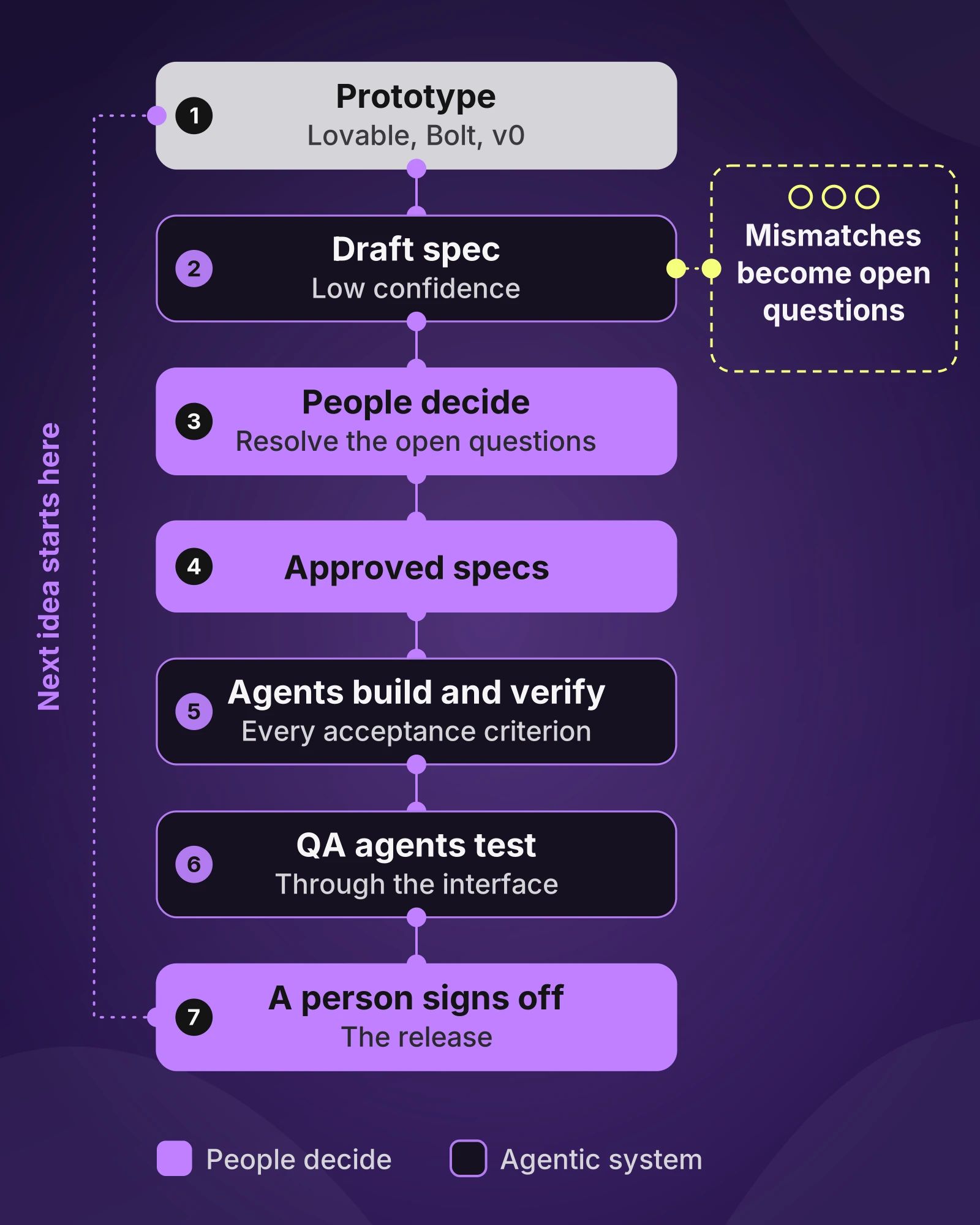
People decide and approve at the start and the end. Agents build and test in between, and the prototype stays open for the next idea.
- Rootshift drafts the Ground Truth from the prototype and everything else you can share, logging mismatches as open questions.
- People close the open decisions, security and permissions first, and approve each capability. Start with who can see what, because that's the one that turns into a privacy incident.
- Agents build from approved specs, in loops that end only when every acceptance criterion passes a check by an agent that didn't write the code.
- QA agents test the running app through the interface, like a user would.
- A person signs off on each release.
The prototype stays, as the place you try the next idea. While the specs get written, keep it open in one tab. Just don't let it decide who can see what.
If you have a prototype and want a second opinion, send me the link and I'll tell you what I'd ask first.
Frequently asked questions
Is Lovable production ready?
Lovable can deploy and host an app that real people use. Whether that app is production ready depends on decisions the tool doesn't make for you, like permissions between roles, how the data model changes over time, SSO or MFA, and how long you keep personal data. Until a person has made and approved those, treat it as a prototype.
What's the difference between a prototype and production software?
A prototype proves an idea works for the person who built it. Production software works for every user, role and failure case someone decided it should handle, and it can change without breaking what's already there. The screens can look identical.
Can I keep prototyping in Lovable or Bolt after the product is in production?
Yes, and it often helps. Try new flows there quickly, and treat what you build as input for the next spec rather than code that goes straight into the product.
Should I rebuild or harden a vibe-coded app?
Harden it in place when real users and data depend on it and the code does what the approved specs say, story by story. Rebuild from the specs when an audit shows it doesn't, or when so many tools and vendors built it that intent and accidents can't be told apart. Either way the specs and decisions carry over, so the choice weighs less than it used to.